
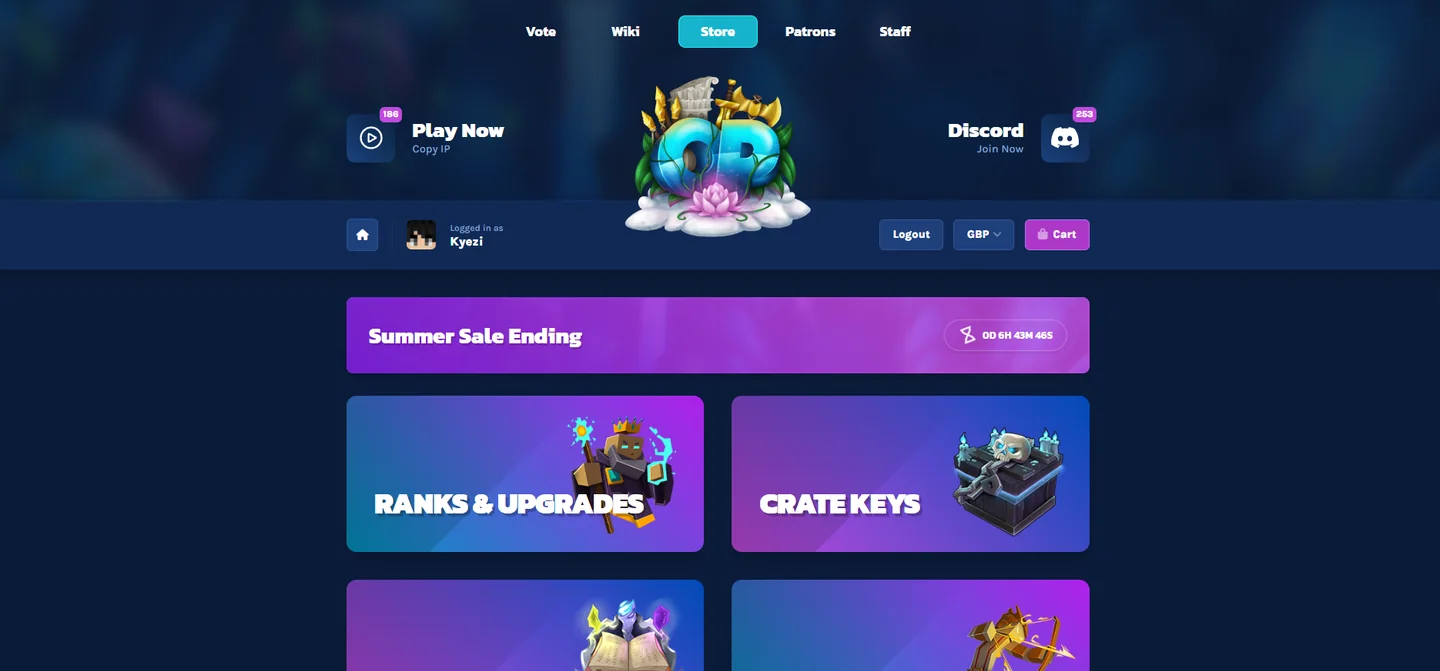
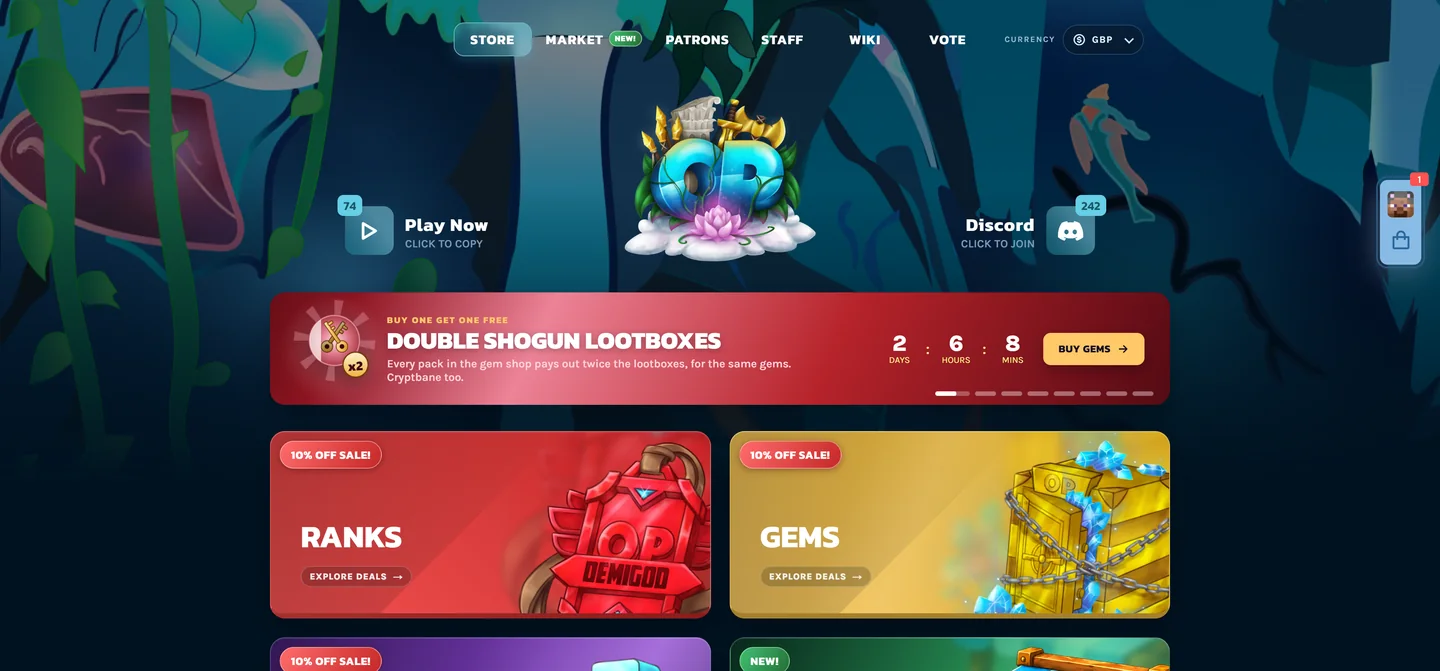

A sale with a deadline on it
Eight offers rotate through one slot under the hero, each on a running clock. A deadline a player can see is the cheapest lever there is.
Minecraft store optimisation
Looking good and selling well are different jobs. Server stores are the whole practice here, and every technique on this page was tested on my own server first.
Ten minutes, in writing, no pitch. If a rebuild is not worth it I will say so.
 Java and Bedrock


What ships
Real screenshots, all of it live right now on OraclePvP. Not a marketplace theme restyled and resold.
Eight offers rotate through one slot under the hero, each on a running clock. A deadline a player can see is the cheapest lever there is.
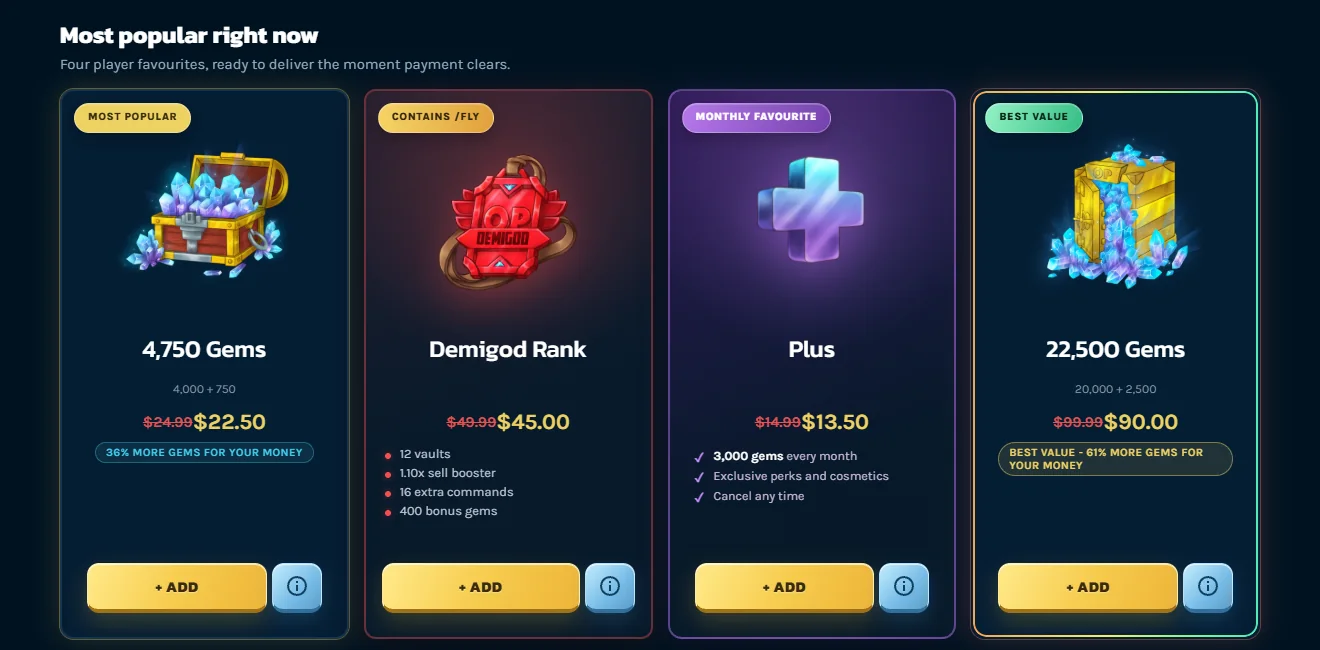
Most popular. Best value. Thirty-one percent more gems for your money. The comparison gets made for the player rather than left to them.
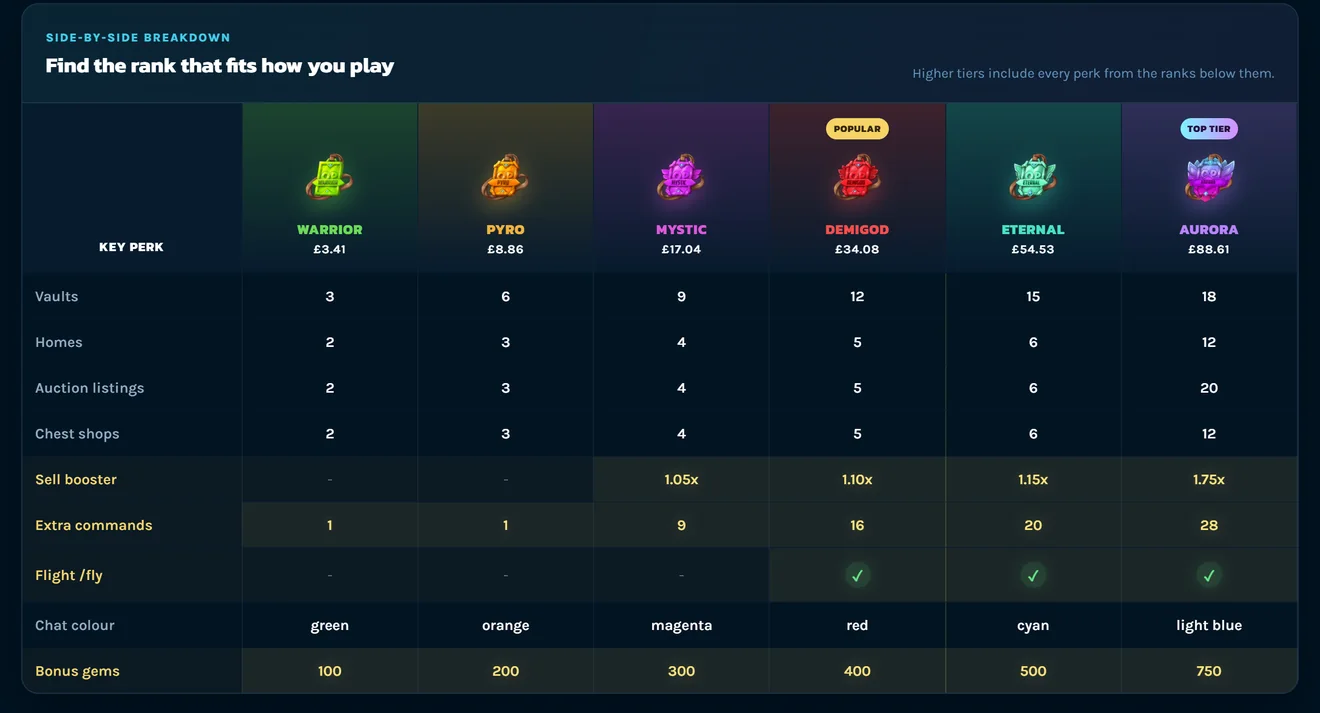
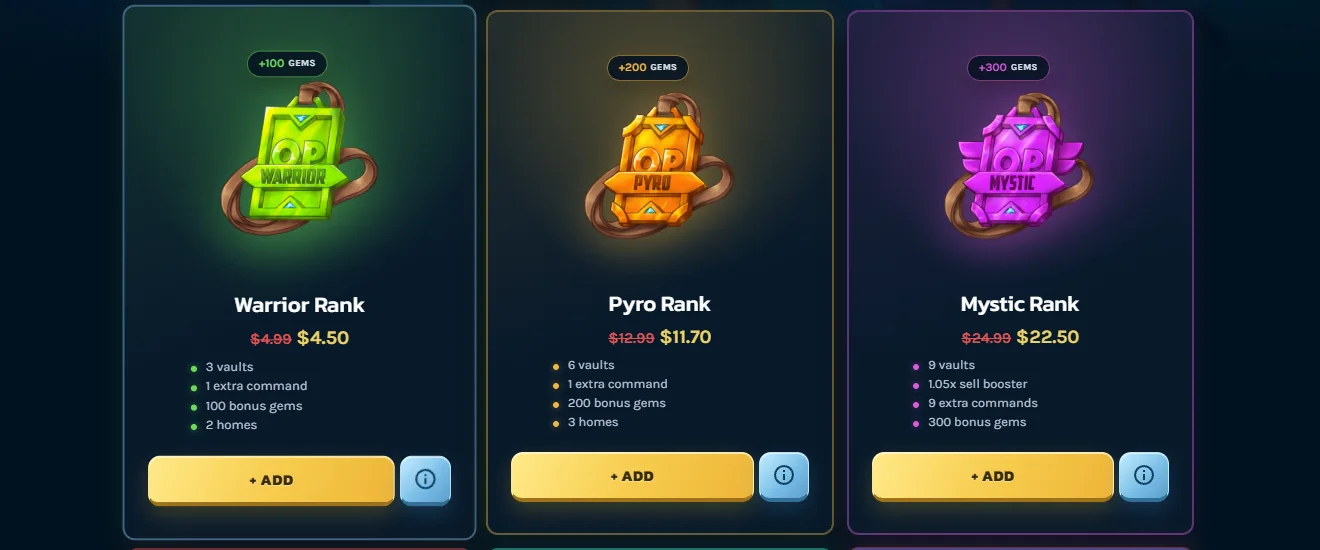
Six ranks, every perk lined up in one table. A player who cannot compare tiers defaults to the cheapest one, or to nothing at all.

A ranked player is shown what the difference costs, not the full price again. It turns a dead end into the easiest second sale on the store.
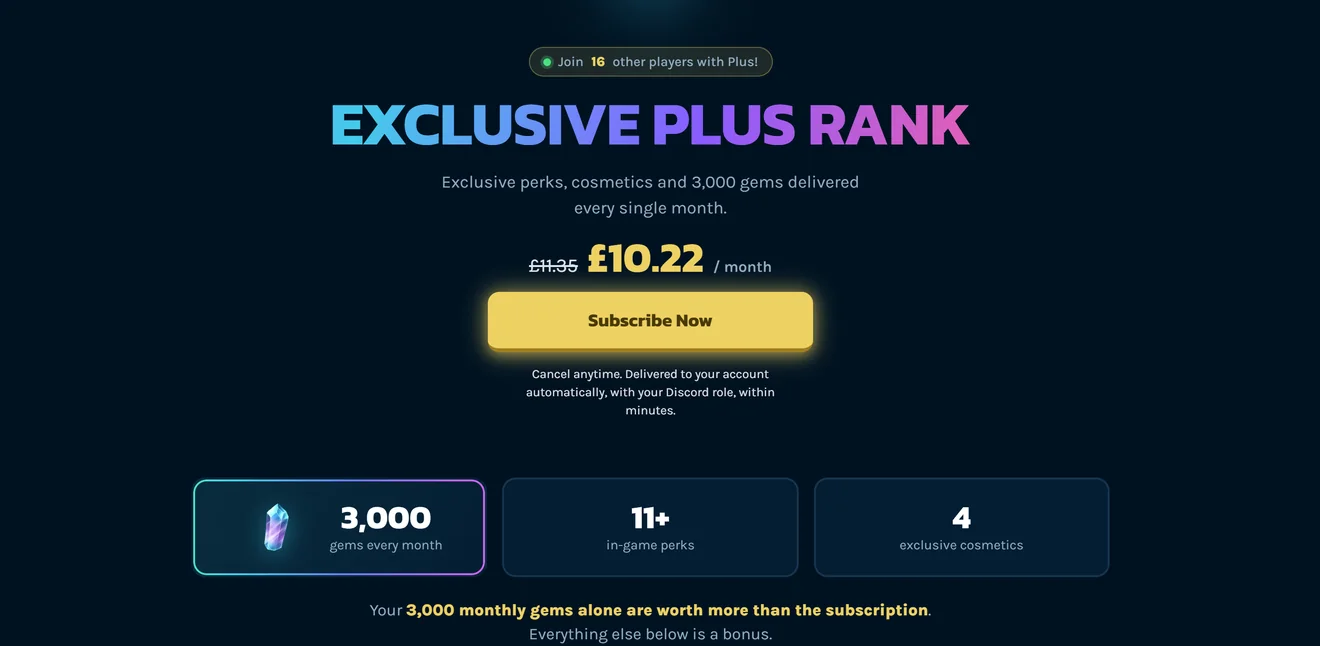
A monthly rank priced under the gems it hands out. One buyer billed every month beats one sale and silence, and it makes next month predictable.
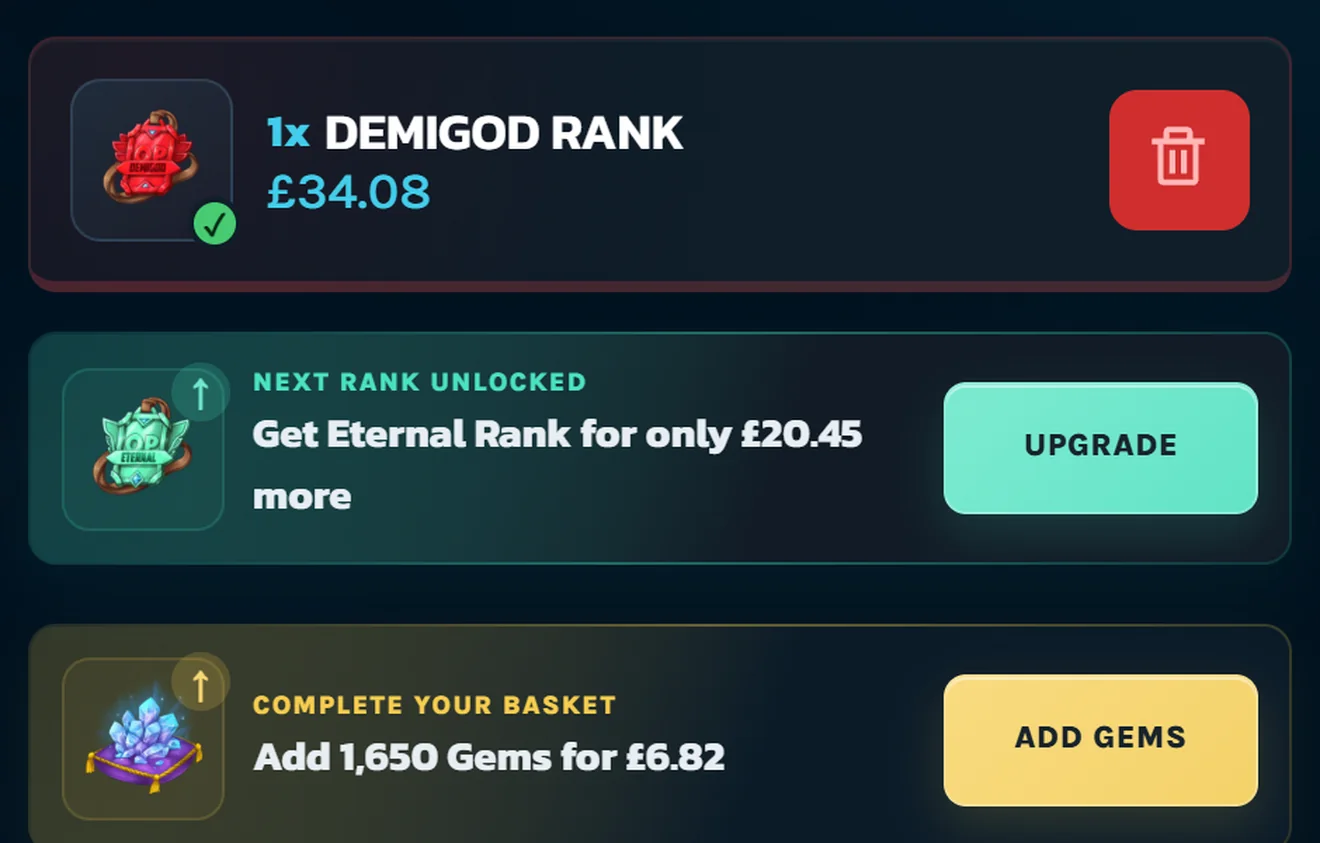
Next tier up for the difference, and a gem pack to round the order out. Both offered while the card is already on the table.
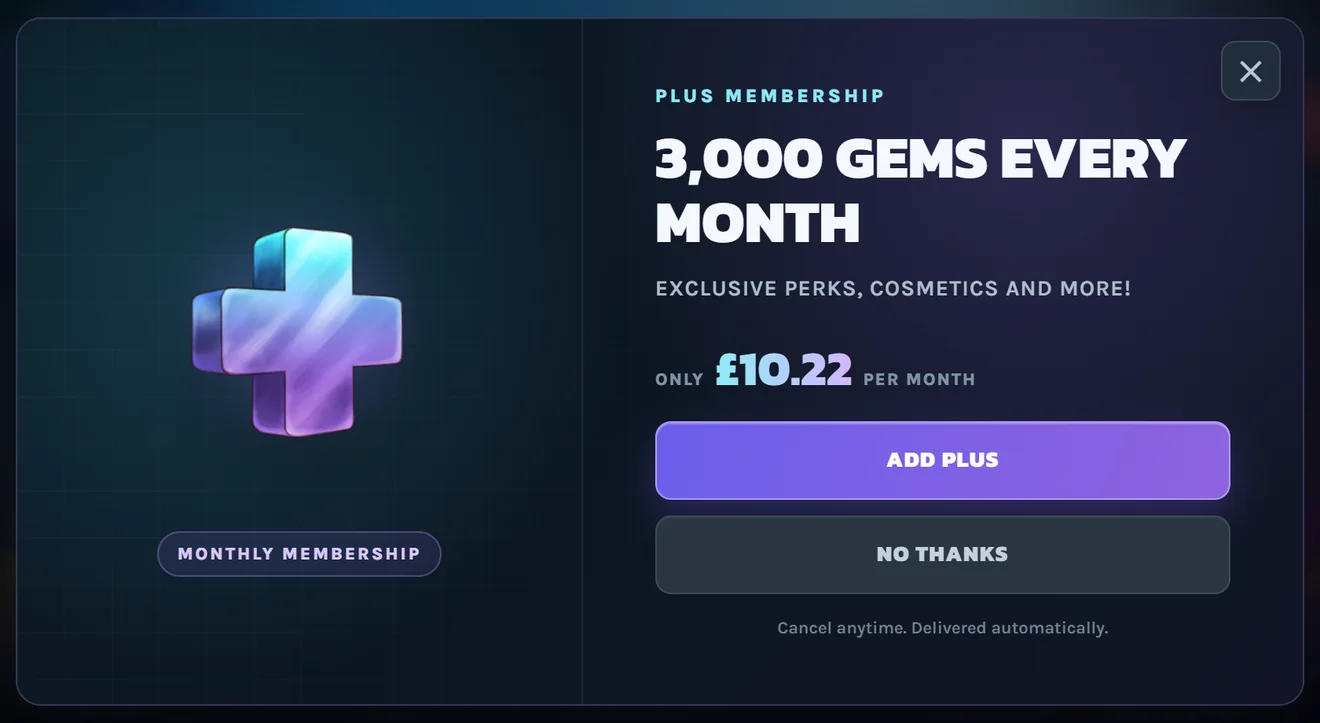
The subscription is pitched on the way to payment, when intent is at its highest. Add or decline, the basket survives either answer.
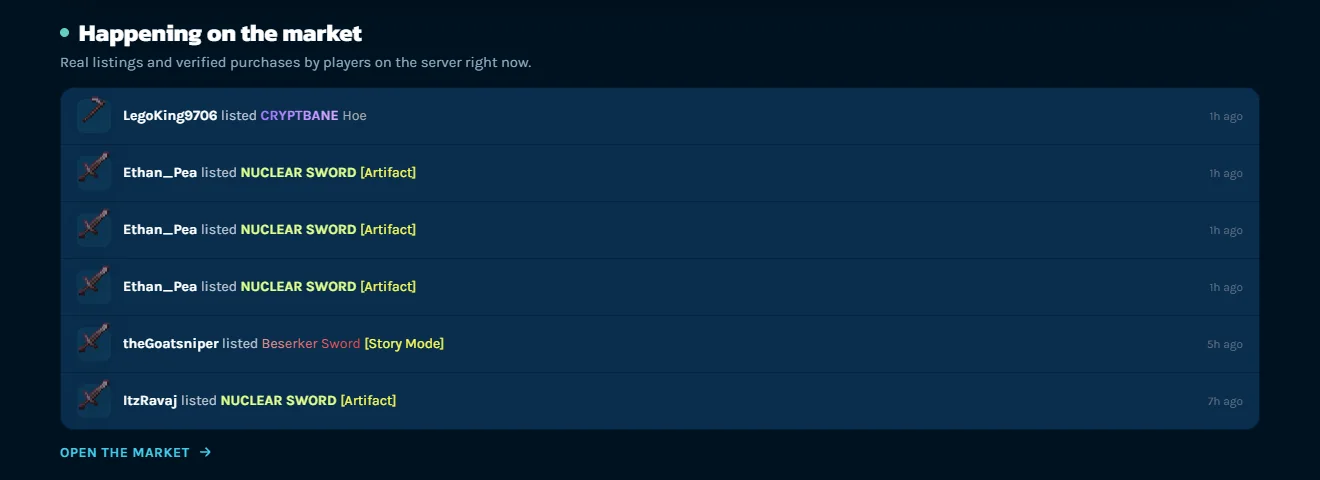
A live feed of what people actually bought, timestamped. No testimonial section, because nobody scrolls to a testimonial section.
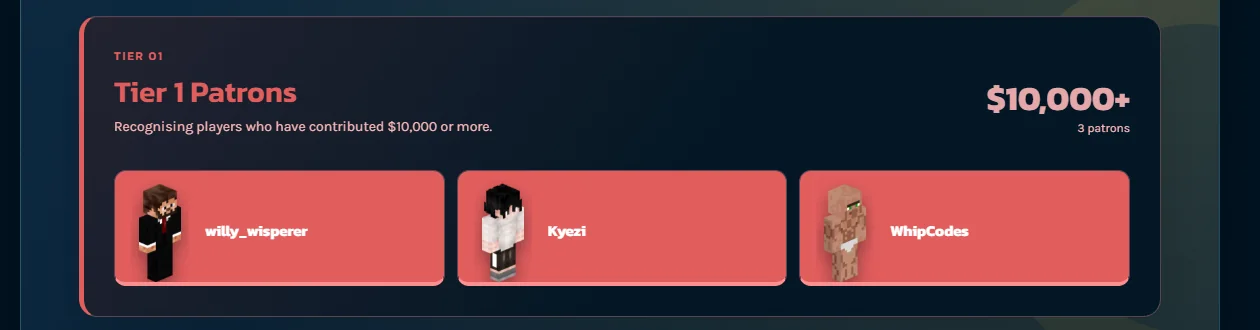
A patrons board carrying the player's own skin. The top of this page is the most competitive place on the whole server.
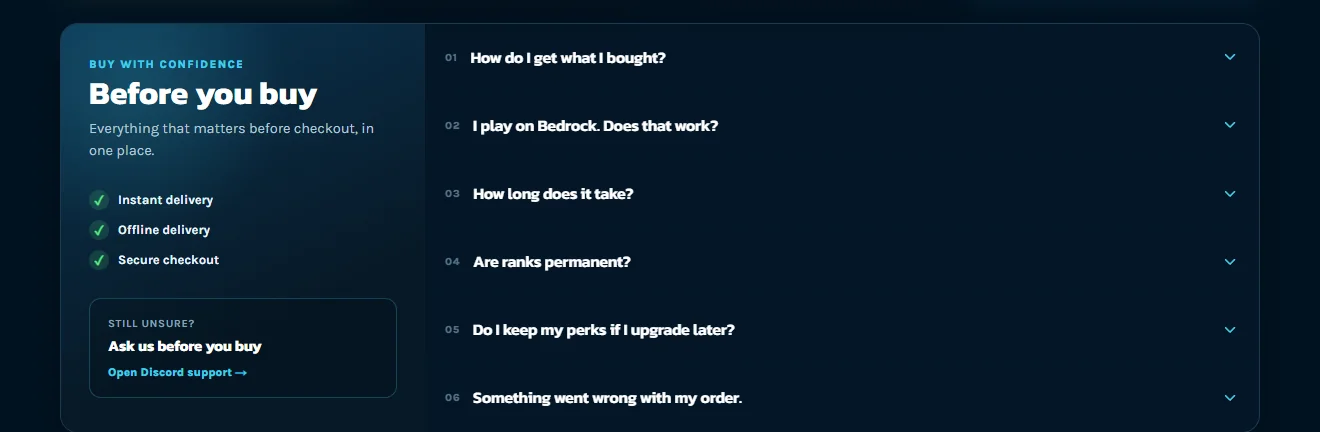
Delivery, Bedrock, timing, permanence. The four questions that stall a first purchase, answered on the page instead of in a support ticket at midnight.
The numbers
Anyone can show you screenshots. I show you what the screenshots did. The rebuild went live on OraclePvP on 21 August 2026, and a dashboard behind the store measured every figure below on both sides of that date.
Run your own number
Whatever currency you take. The estimate comes back in the same one.
Estimated after the rebuild
2,875 to 3,125
An uplift of +15% to +25% a month, the range OraclePvP's own revenue moved after 21 August.
One server's result is not a promise. Where you land in that range depends on how much of this your store already does and how much traffic reaches it at all. Send me the link and I will tell you which end you are nearer.

Case study, tested on my own server
Most studios test ideas on a client's revenue. I test them on mine first. OraclePvP is a Skyblock server I own and operate, and it is where every technique on this page was tried, measured and either kept or thrown out.
Packages sat in a grid with an On Sale badge on every card, which meant none of them read as a deal. I rebuilt it around the decision a player is actually making: what do I get, what does it cost, and why this tier.
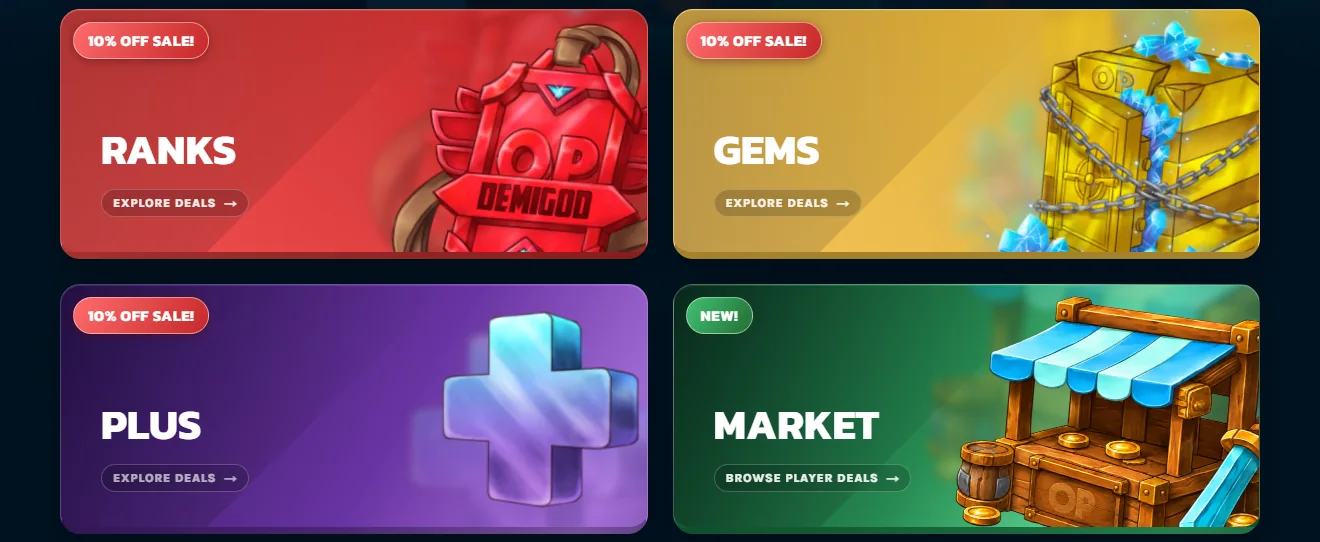
Four illustrated categories replaced a text nav, each with one call to action, and a reassurance row underneath answering delivery, offline delivery and card safety before a player has to ask.
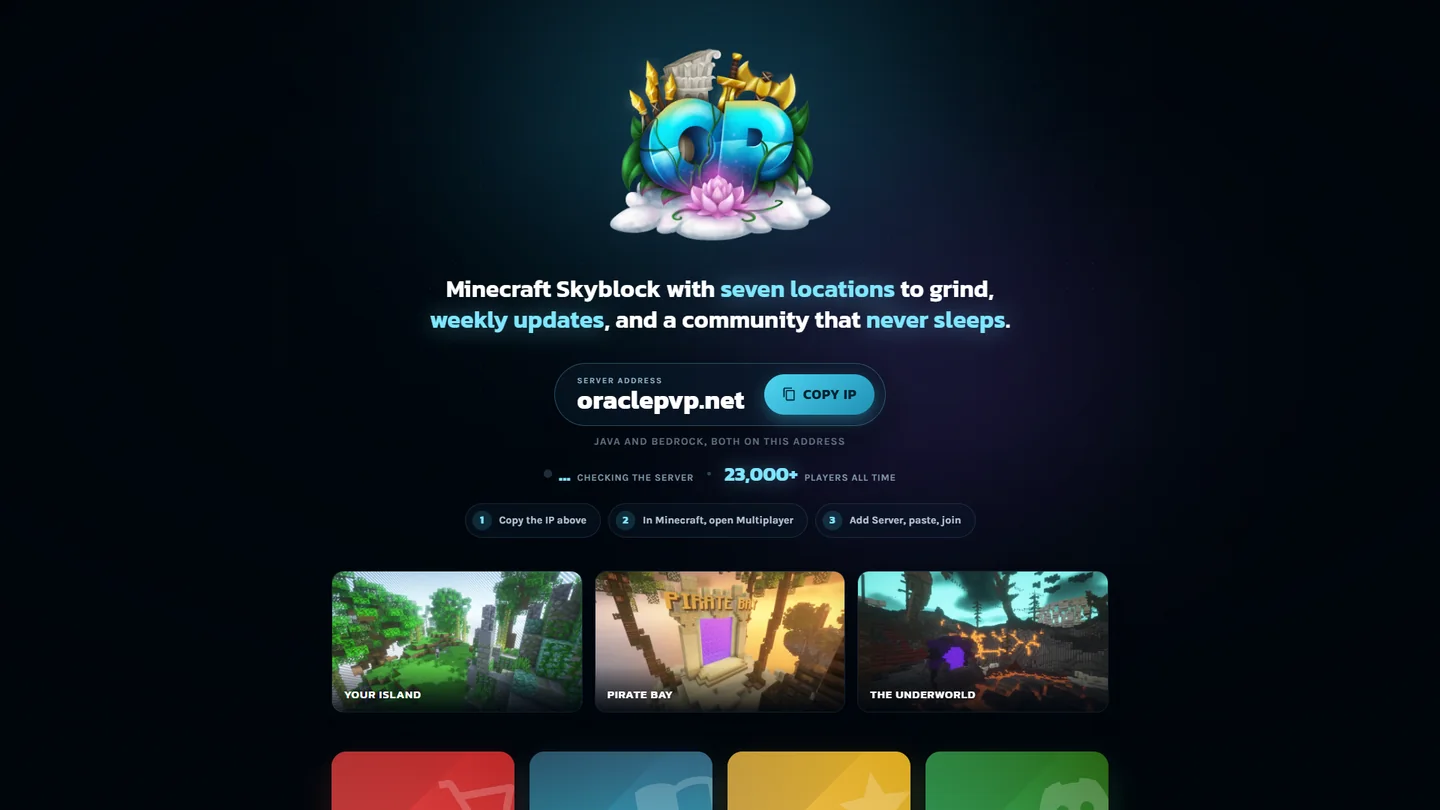
oraclepvp.net resolved but served no website. The SRV record already carried Java joins, which freed the apex A record to serve a page without breaking how players connect. 947 KB, no build step, no backend.
Then I measured it. A dashboard behind both properties tracks first join address, acquisition source and revenue per source, which is where the figures further up this page come from, and how I know which of these changes actually paid.
Available for projects last seen recently
Send your store link. You get ten minutes of notes in writing on what it is leaving on the table, and an honest answer on whether a rebuild is worth the money.